Launceston Learning Centre for Seniors

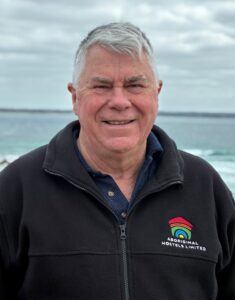
On Tuesday, 27 October, our guest speaker for Seniors Month will be Major General (Retired) Dave Chalmers AO, CSC.

Dave enjoyed a long career in the Australian Defence Force, including senior command appointments and operational service in East Timor and Aceh.

He subsequently spent 15 years in the Australian Public Service, working in Indigenous affairs, veterans’ affairs, and national commemorations, before retiring to Perth, Tasmania.

Dave is Vice Chair of the Launceston Learning Centre for Seniors. He will trace the Centre’s development and highlight the range of activities available to people aged 50 and over, including opportunities for social connection, learning, and creativity.

He will explain how attending will help you discover new interests and meet like-minded community members. He will also outline membership options and describe how the Centre celebrates volunteer tutors, and how it encourages newcomers to try something new and feel included in our community.
Pennyroyal Flower Mill, Tasmanian Bushrangers, and Tasmanian Tigers

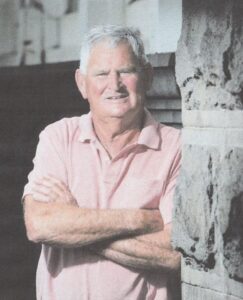
On 22 September, our guest speaker will be David Gatenby OAM, a seventh-generation Tasmanian.
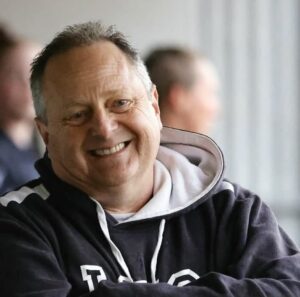
David will share highlights from the life of Andrew Gatenby (1771-1848), a farmer who emigrated from Wales in 1823 and settled in Tasmania’s Midlands, where he established Barton Farm and built the Pennyroyal Mill on Pennyroyal Creek.

David, a retired farmer, will talk about Andrew’s experiences with the Mill, Bushrangers, and Thylacines.

The full account of the Gatenby family, The Gatenby Saga, was documented by Carol Bacon and David Gatenby and published by Saint Martin’s Press in 2021.

This is a unique opportunity to hear a well-researched account of the challenges and achievements of nineteenth-century settlers told by a descendant who has farmed and protected the property that Andrew acquired two hundred years ago.


History and progress of dentistry

This week’s speaker was Dr Wayne Ottoway, a highly experienced dentist who has served two terms as National President of the Australian Dental Association and is a member of the Australian Dental Council.
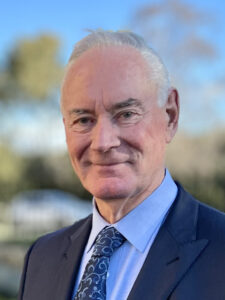
He is also a well-known hockey player and coach. In his spare time, Wayne is a devoted fan of the BBC Doctor Who television series, to the point that he has built life-size replicas of a Dalek, a K9, and the TARDIS.

Wayne is also passionate about the evolution of teeth, the variation of dentition between different animals, and the history of dentistry, drawing on his fine collection of rare books, articles, artifacts, and dental instruments.

His presentation traced the oldest known evidence of dental treatment to ‘a 59,000-year-old Neanderthal tooth from a Russian cave that shows signs of having been drilled with a stone tool’, and then spoke of the history of dentistry in ancient China, Egypt, Europe, and South America.

Finally, Wayne described the development of dental technology through to the current state of modern anaesthetics, high-speed drills, composite fillings, digital imaging, CNC milling machines, and dental implants.


Graduation Ceremonies: A thousand years of history

Our guest speaker on 28 July is Jeff Hockley OAM. For the past 50 years, he has been active in the theatre and cultural life of the city. If you haven’t seen him on stage or on-screen, then you might have seen his work as a director of dozens of musicals and plays.
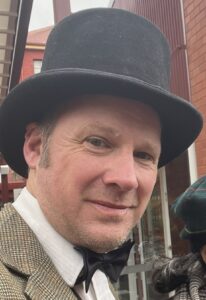
In his other life, he was, for 25 years, the graduation officer at the University of Tasmania, conducting those all-important rites of passage throughout Tasmania, as well as in Sydney, Hangzhou and Shanghai. Thousands of graduates have been guided through the ceremonial process in that time.

Graduation ceremonies touch all our lives at some time or another, but what does this formerly medieval rite-of-passage mean in a modern age? What ancient messages are embedded in the ceremony itself, the dress codes, and those funny hats? Please join Jeff Hockley as he uncovers the fascinating history behind the graduation process.

Tamar River Restoration Plan

On Tuesday, 23 June, our speaker will be Bruce Cassidy. He will outline his proposal for the restoration of the Tamar River to address tidal movement, the risk of major flooding, and the removal of silt and mud by building a dam near Stevenson’s Bend and a lock in Hunters Cut, creating upstream diversions in the North and South Esk Rivers, and a West Tamar wetland.

Launceston’s Early Years: 1804 to 1842

On Tuesday, 26 May 2026, our guest speaker will be Jon Addison, the Senior History Curator at the Queen Victoria Museum and Art Gallery (QVMAG).

His talk will take us through the main events that led to the development of Launceston. Jon will focus on the landmarks, buildings and personalities that contributed to Launceston, ending in the key year of 1842.

Jon’s work has taken him around Australia and the world.

He has worked at a number of museums and institutions, including the National Trust of Western Australia, the Western Australian Maritime Museum, the London Transport Museum, and the Scottish Maritime Museum, before taking up his current role at QVMAG in 2008.

Jon is also particularly interested in music, and plays flute, piccolo and a variety of unusual medieval instruments.

Cornerstone Youth Services

Rani Sice, the Deputy CEO of Cornerstone Youth Services, will be the guest speaker for our meeting at the Launceston Golf Club on Tuesday, 28 April 2026.
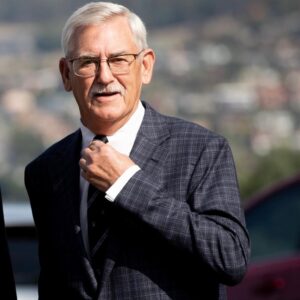
Rani’s presentation will provide an overview of Cornerstone’s programs in North and North West Tasmania.

Cornerstone focuses on health promotion, early intervention and prevention, advocacy, case management, and the development of help-seeking behaviours in young people.

Annual General Meeting and Film: Launceston in 1966

On 24 March, our Club will hold its 44th Annual General Meeting and induct our new President, Dr Noel Sowter.

After that, we turn the clock back 60 years by presenting the 1966 documentary film Launceston: Life in Australia, produced by Eric Thompson for the Commonwealth Film Unit. John Edwards and Peter Young directed it as part of a series designed to showcase Australian cities to prospective European immigrants.

Highlights of the film include rare footage of textile mills (Patons & Baldwins, Kelsall & Kemp, and Waverley Mills), plus Tas Board Mills, Launceston Railway Workshop, Showgrounds, Launceston Technical College, Repco Bearing Company, Brooks High School, Launceston High, restaurants, shops, and Launceston nightlife.

Nearly all the buildings shown in the film have survived, but many factories, businesses, social events, and lifestyles have changed dramatically in such a short time.

Reflections on fifty years in the travel industry

On Tuesday, our guest speaker will be local entrepreneur and travel expert Mark Brown.
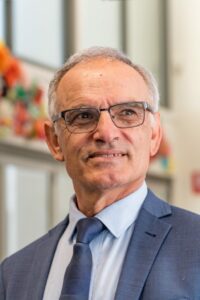
Mark was born in Cygnet, Tasmania, in 1949 and spent his early years at Bothwell before moving to Trevallyn in 1956.

He was educated at Launceston Church Grammar School before joining the well-known Launceston law firm, Ritchie & Parker, in 1966.

In 1969, Mark was conscripted for National Service, and he served with the Australian Army in Vietnam from 1970 to 1971.

In 1972, he joined Ansett Airlines in Launceston and worked for them until 1989, when he opened his own highly successful local travel agency, which he ran for the next 30 years.

Health and Ageing Well

Our guest speaker on Tuesday, 27 January 2026, will be Professor George Razay MP.

George says, “During my 40-year career, I have spent 28 years working as a General Physician and Geriatrician in a busy medical ward at the Launceston General Hospital. I have also served as a Councillor for the City of Launceston and am now proud to represent the people of Bass as an Independent member of parliament, committed to building a healthy, happy, and active community. My topic will be Health and Ageing Well, including a discussion about the prevention of Dementia